


Common Myths About Scandinavian Design (And What the Style Actually Requires)
"Scandinavian" might be the most overused word in home decor, and also one of the least understood. It gets slapped on anything pale, anything minimal, anything with a hint of wood — which means the term has drifted a long way from what it actually describes. Here's what's actually true, and what's just gotten attached to the label along the way.
Myth: It's a Look, Not a Design Philosophy
The biggest misunderstanding is treating Scandinavian design as an aesthetic you can copy from a photo. It's a design movement with an actual origin: it emerged in the early 20th century and reached its peak in the 1950s across Denmark, Sweden, Norway, Finland, and Iceland, shaped by designers like Alvar Aalto and Arne Jacobsen. Danish design specifically grew out of the German Bauhaus school's belief in function over ornament, applied to furniture regular households could actually afford.
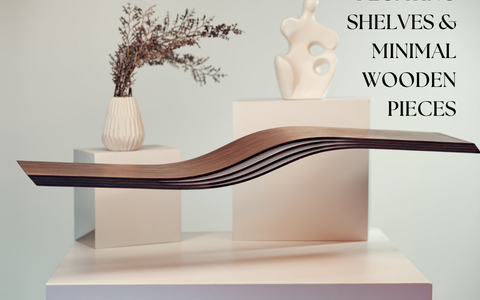
That's the part that gets lost. The style wasn't built around a color palette — it was built around the idea that everyday objects should be well-made and useful first, and only decorative as a byproduct of doing their job well. Light wood and clean lines followed from that goal. They weren't the goal. A wall-mounted floating shelf is a decent litmus test for this: it either earns its spot by holding what a room actually needs, or it's just another surface collecting clutter — the design only works if it does the first one.

The style also didn't stay a regional habit by accident. In 1954, the Brooklyn Museum ran an exhibition called "Design in Scandinavia," and it's a large part of why an American furniture-buying public started using the word at all. Before that, this was simply how Danish, Swedish, Norwegian, and Finnish workshops built furniture — a domestic design tradition, not an export brand. The "look" people now shop for was originally just the byproduct of a small group of manufacturers solving the same problem the same way, independently arriving at similar answers because they shared the same priorities.
Myth: "Hygge" Is Scandinavian Design
Hygge gets used constantly in Scandinavian interior content, and it's not quite right. Hygge is specifically a Danish and Norwegian word describing a cozy, contented mood — candles, blankets, a shared meal — and it's a lifestyle and social concept, not a design system. Sweden has its own version, lagom ("not too much, not too little"), and Norway also uses koselig. These are real, distinct cultural ideas about atmosphere, not interchangeable synonyms for Scandinavian design, and none of them are actually about furniture construction or material choice. A room can be hyggelig without being Scandinavian in the design sense, and a well-designed Scandinavian piece can sit in a room that has nothing to do with hygge at all. They get bundled together in marketing because they come from the same region, not because they mean the same thing.

Myth: White Walls Make a Room Scandinavian
White gets treated as the defining feature, when it's really just one option within a bigger material logic. The actual signature of the style is natural wood left honest — visible grain, a real finish, no heavy stain hiding what it's made of. Ash and oak read lighter and cooler; walnut and wenge run warmer and darker and tend to work better as an accent than as the whole room. White walls with no wood, no texture, and nothing tactile in the room isn't Scandinavian — it's just empty. The material is doing the actual work; a coat of paint on top of the wrong material doesn't fix that.
This is also where a lot of "Scandi-style" furniture fails in practice. Painted MDF with a wood-grain sticker doesn't age the way solid wood or a genuine wood veneer does — it chips, and it never develops the texture that makes the style hold up over years instead of one season. A floating nightstand built from a real ash, oak, or walnut veneer over a stable plywood core is the kind of construction the style actually depends on — not because it says "Scandinavian" on the listing, but because the material genuinely behaves the way the style requires.

Myth: Scandinavian and Japandi Are the Same Thing
They overlap, but they're not interchangeable. Scandinavian design is rooted in Nordic functionalism — practical, democratic, built for a cold climate and long winters. Japandi is a more recent fusion of that Scandinavian restraint with Japanese wabi-sabi, which brings in a different set of values around imperfection and quiet asymmetry. The two borrow from each other constantly, which is exactly why they get confused, but a purely Scandinavian piece is judged on function and honest material first; a Japandi piece is also judged on a kind of deliberate imperfection that Scandinavian design was never really about.
Myth: IKEA Is What Scandinavian Design Actually Looks Like
IKEA is genuinely Swedish — founded in 1943 by Ingvar Kamprad, and its own long-standing language for its business model is "democratic design," meaning affordable, well-designed furniture for as many people as possible. In that sense, it's a legitimate descendant of the same movement, not a fake version of it. But the construction methods are a different story: IKEA leans heavily on flat-pack, ready-to-assemble pieces built largely from MDF and particleboard, which keeps costs and shipping volume down but isn't the solid-joinery, real-material standard that names like Aalto and Jacobsen actually built the style's reputation on. IKEA is Scandinavian by origin and by philosophy. Whether any specific piece meets the material standard the style is known for is a separate question, and worth asking before assuming "affordable and Swedish" automatically means "well made."
Myth: More Neutral Always Means More Scandinavian
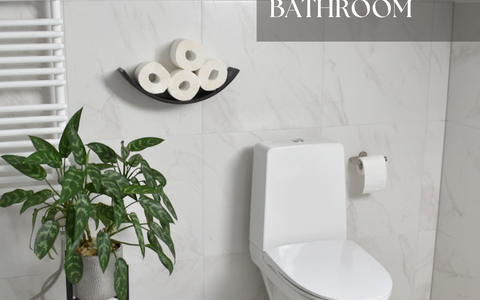
Stripping a room down to bare white and pale wood with nothing else in it doesn't intensify the style — it just makes the room read as unfinished. Real Scandinavian interiors are full of texture, just not full of color: wool, linen, a bit of black or brass metal for contrast, and enough visible grain that the room doesn't feel sterile. A small detail carries more weight here than people expect. A wooden toilet paper holder in a bathroom otherwise made of tile, porcelain, and chrome does more to establish the material honesty of the style than another blank wall does — because it's an object that's actually used daily, not one sitting there for the photo.

Myth: Any Furniture Brand Selling Light Wood Counts
Mass-produced flat-pack furniture borrowed the palette of Scandinavian design without always borrowing the standards behind it — solid joinery, real veneer, materials chosen to last rather than to hit a price point. That's not a knock on affordability, which was genuinely part of the original movement's goal, as the IKEA example above shows. It's a distinction between design intended to be replaced in a few years and design intended to be lived with for a decade or more. A hallway piece like a wooden coat rack makes the point well — it's meant to be touched every day, so the difference between real ash and a laminate imitation shows up fast, in a way it wouldn't on a purely decorative object.

Where to Start
If a room already looks the part but doesn't quite feel right, the fix usually isn't more furniture — it's checking whether what's already there is doing an actual job or just wearing the look. Start with one object that gets used daily, in a real wood finish, and let it set the standard for anything added afterward. That's closer to how the style actually works: function and honest material first, everything else after.
None of this means the style has to be expensive or precious. The original movement was explicitly about affordability, not exclusivity — the myth worth keeping is that good design and reasonable pricing were never supposed to be at odds. What actually separates a real piece from an imitation isn't the price tag; it's whether the material and construction hold up to the daily use the object was designed for. Our full range of wood floating shelves, nightstands, and home accessories is built on that same standard, in oak, walnut, ash, cherry, and wenge veneer.
EWART WOODS makes handcrafted wooden floating shelves, nightstands, and home accessories in oak, walnut, ash, cherry, and wenge veneers. Made in Latvia, shipped worldwide.


Atstājiet savu komentāru